What is a Receipt? Complete Guide
Complete guide to receipt definition and importance. Learn what receipts are, their legal value, types of receipts, and how they protect buyers and sellers.
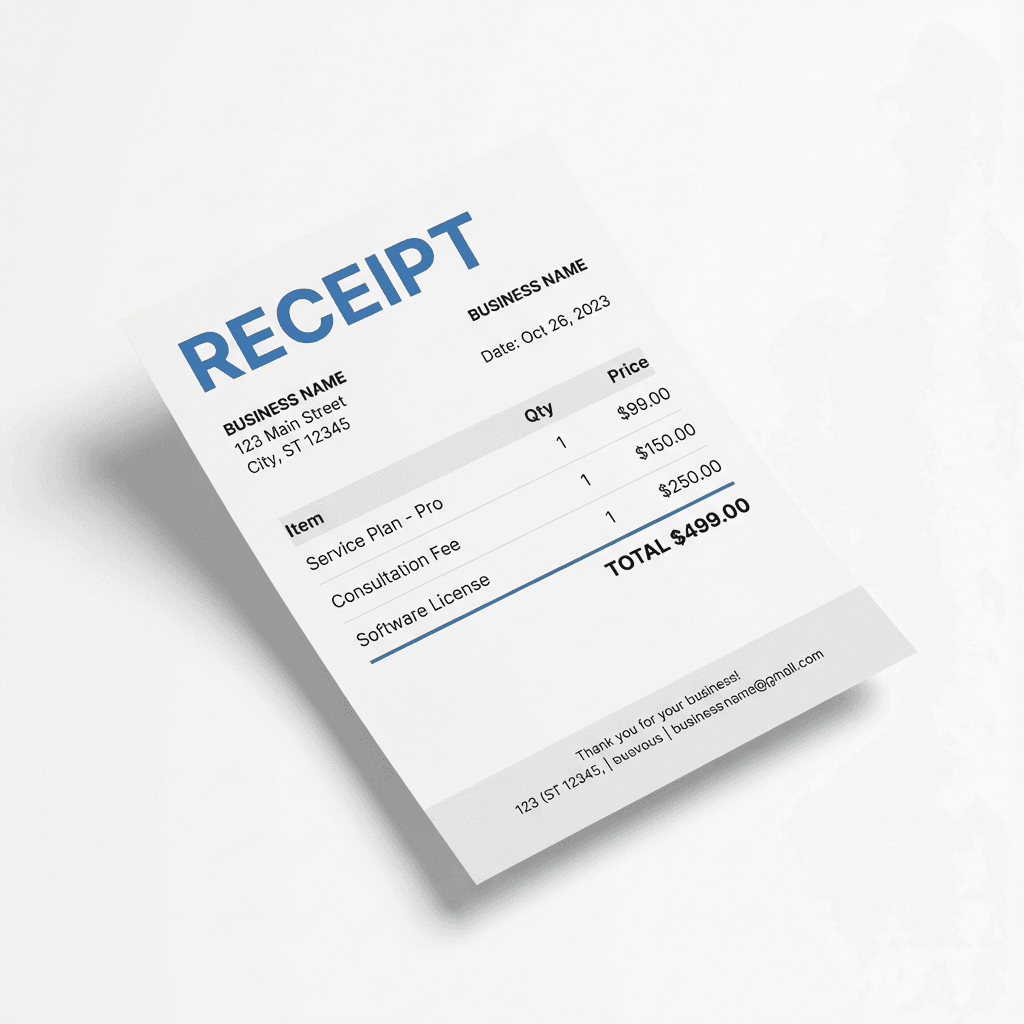
💡Key Takeaways
- A receipt is official proof that payment was received for goods or services
- Essential receipt components include date, seller info, items/services, amount, and payment method
- Receipts serve multiple purposes: proof of purchase, tax documentation, warranty activation, and legal protection
- Keep receipts for 3-7 years for tax purposes, longer for business assets
- Both paper and digital receipts are legally valid when they contain required information
What is a receipt? The receipt definition is simple. A receipt is proof that payment was received for goods or services.
But the receipt importance goes far beyond a slip of paper. Receipts are critical financial documents that protect your rights as consumers and help you manage finances.
Whether you're buying groceries, paying rent, or running a business, understanding receipts matters. This guide covers the complete receipt definition and explores different types of receipts.
Ready to create your first receipt? Use our hotel receipt generator for travel documentation, restaurant receipt generator for dining expenses, gas receipt generator for fuel tracking, and donation receipt generator for charitable contributions.
✓ Free forever — no signup required
✓ Professional, legally compliant formats
✓ Private by design — receipts are built in your browser
Disclaimer: This article provides general information about receipts and their uses. It does not constitute legal, tax, or financial advice. Tax laws and receipt requirements vary by jurisdiction. Consult a qualified professional for advice specific to your situation.
🎯 Create Your First Professional Receipt
Learn by doing—generate a complete, professional receipt in 30 seconds
What is a Receipt? The Complete Definition
A receipt is a written or electronic document that acknowledges payment has been received. It serves as official proof that a financial transaction occurred between two parties.
Think of a receipt as the final confirmation of a purchase. When you buy something, the receipt documents what was exchanged and how much was paid.
According to legal definitions, a receipt is written acknowledgment that one person received money from another. This serves as prima facie evidence in court.
Key Characteristics of a Receipt
What makes a document a receipt? Several defining characteristics set receipts apart from other financial documents, including being issued after payment and serving as proof of completion.
- Issued After Payment: Receipts are created only after payment has been received, not before
- Proof of Completion: They confirm a transaction is complete, not pending
- Unilateral Document: The seller issues the receipt to the buyer
- Transaction Record: They document specific details about what was exchanged
- Legal Evidence: They serve as admissible proof in legal and tax matters
Why Receipts Matter: The Primary Functions
Receipts serve multiple critical functions for both consumers and businesses. Understanding these purposes helps you appreciate why keeping receipts is worth the effort.
1. Proof of Purchase and Payment
The most fundamental purpose is proving you paid for something. This proof becomes essential for returns and exchanges.
Without a receipt, many retailers won't process returns or warranty claims.
2. Tax Documentation and Deductions
For businesses and individuals, receipts are non-negotiable for tax deductions. Tax authorities require receipts as evidence to verify claimed business expenses and confirm charitable donations.
During an audit, receipts become your primary defense against challenges to your deductions.
3. Warranty and Return Protection
Most warranties require the original receipt to prove when you purchased the item. This determines if it's still under warranty coverage.
Return policies typically require receipts to verify the purchase date and price paid for the item.
4. Expense Tracking and Budgeting
Receipts help you track where money goes each month. By reviewing receipts, you can identify spending patterns and create accurate budgets.
Businesses use receipts to monitor cash flow and control expenses.
5. Legal Protection and Dispute Resolution
If a dispute arises, your receipt serves as evidence of what was agreed upon and what was paid. This protection works both ways for consumers and businesses.
Essential Components: What Information Should Be on a Receipt
Not all receipts are created equal. A proper receipt should contain specific information to be valid and useful.
When you're creating a receipt or reviewing one you've received, verify these essential elements are present.
Required Receipt Information
- Business Name and Contact Information: The seller's legal business name, address, phone number, and optionally email or website
- Transaction Date and Time: The exact date when the purchase occurred, and time if relevant
- Receipt Number: A unique identifier for tracking and reference purposes
- Itemized Description: Clear description of each product or service purchased
- Quantities: The number of each item purchased
- Individual Prices: The cost per unit for each item
- Subtotal: The total before taxes and additional charges
- Taxes: Sales tax, VAT, GST, or other applicable taxes clearly itemized
- Total Amount Paid: The final amount including all taxes and fees
- Payment Method: How payment was made (cash, credit card, check, digital payment)
Optional but Valuable Elements
While not always required, these additional elements enhance a receipt's usefulness. Consider including customer contact information and return policy details.
Warranty information, authorized signatures, and tax identification numbers also add value to business receipts.
Types of Receipts: Understanding the Different Formats
Receipts come in various forms depending on the transaction type and industry. Knowing which type to use helps ensure proper documentation.
Sales Receipt
The most common type, sales receipts document retail purchases of physical goods. They are issued at the point of sale with itemized products and their prices.
Whether you're buying groceries, clothing, or electronics, you'll receive a sales receipt. Create professional sales receipts using our sales receipt template.
Service Receipt
Service receipts document payment for services rather than physical products. They are essential for contractors, consultants, freelancers, and repair technicians.
Service receipts typically describe the work performed, hours worked, or services rendered. Our service receipt template makes creating these documents simple.
Cash Receipt
Cash receipts specifically document transactions paid in cash. Since cash payments leave no electronic trail, these receipts are particularly important for record-keeping.
Both parties benefit from having written proof of cash transactions. Use our cash receipt template to document cash payments properly.
Rent Receipt
Rent receipts document rental payments from tenants to landlords. They are crucial for tenants claiming housing-related tax deductions and for landlords tracking rental income.
Rent receipts should include property details, rental period, and payment information. Generate professional rent receipts with our rent receipt generator.
Digital or Electronic Receipt
Digital receipts are sent via email, text message, or stored in mobile apps. They contain the same information as paper receipts but in electronic format.
Digital receipts are increasingly common and carry the same legal weight as paper receipts in most jurisdictions.
Donation Receipt
Issued by charities and non-profit organizations, donation receipts acknowledge charitable contributions. They must include specific information required by tax authorities to qualify for tax deductions, including the organization's tax-exempt status.
The Legal Importance of Receipts
Receipts aren't just organizational tools—they have genuine legal significance. Many consumer protection laws require receipts for returns, exchanges, and warranty claims.
Without a receipt, you may lose your legal right to remedy if a product is defective or doesn't meet expectations.
Consumer Protection Laws
Some jurisdictions legally require businesses to provide receipts for transactions above certain amounts. These laws protect consumers by ensuring they have proof of purchase.
Tax Compliance and Audits
Tax authorities worldwide require receipts to substantiate deductions and business expenses. The IRS and other tax agencies accept receipts as primary evidence of claimed expenses.
During an audit, receipts are your first line of defense for proving legitimate deductions.
Business Record-Keeping Requirements
Businesses are legally required to maintain transaction records for specified periods, typically 3-7 years. Receipts form the backbone of these required records.
Proper receipts help businesses track income, expenses, and tax obligations accurately.
Evidence in Legal Disputes
In case of disagreements between buyers and sellers, receipts serve as evidence of what was agreed upon. Courts accept receipts as prima facie evidence.
Receipt vs. Invoice: Understanding the Difference
People often confuse receipts with invoices, but these documents serve different purposes. An invoice is a request for payment sent before payment is made.
A receipt confirms payment has been received, telling the customer what they paid. Think of it this way: invoices come first, receipts come second.
Some businesses issue both documents for the same transaction. Learn more in our receipt vs invoice comparison to understand when to use each document.
How Long Should You Keep Receipts?
Receipt retention periods vary based on the type of purchase and your tax situation. For everyday purchases, keep receipts until the return period expires.
For tax-related receipts, keep them for 3-7 years depending on your country's tax laws. Business receipts should be maintained for a minimum of 7 years.
Home improvement receipts should be retained until you sell the property. Medical expenses should be kept for at least 3 years if claiming tax deductions.
Digital receipts are easier to store long-term than paper receipts. Consider scanning paper receipts and saving them in cloud storage for convenient retention.
Creating Professional Receipts: A Practical Guide
If you're a business owner, landlord, or freelancer, you need to issue receipts. Creating professional receipts is simpler than you might think.
💡 Try Creating a Receipt Right Now
The best way to understand receipts is to create one. Our generator includes all the fields mentioned above—see how easy it is
Create Receipt Now →When You Must Provide a Receipt
While requirements vary by jurisdiction, you should provide a receipt in these situations: any time a customer pays you, when receiving rent payments, and for all cash transactions.
Also provide receipts when legally required by local regulations, whenever the payer requests one, and for transactions above certain amounts.
How to Create Receipts Quickly
You don't need expensive software to create professional receipts. Our free receipt generator allows you to create customized receipts in seconds.
For specific receipt types, we offer specialized templates including cash receipts, rent receipts, and service receipts.
Digital vs. Paper Receipts: The Modern Landscape
The shift toward digital receipts continues to accelerate. Understanding the advantages of each helps you choose the right format.
Paper Receipts
Paper receipts are immediate and tangible, requiring no technology. However, they fade over time, are easy to lose, and take up physical space.
Digital Receipts
Digital receipts are easy to store and organize, searchable and won't fade. However, they require an email address and can get lost in spam folders.
Both paper and digital receipts are legally valid as long as they contain the required information. Many businesses now offer customers a choice between formats.
Common Receipt Mistakes to Avoid
Whether you're creating or receiving receipts, watch out for common mistakes. Missing information can cause problems with returns or tax purposes.
Illegible receipts from faded thermal paper make receipts useless. Receipts without unique identifiers are harder to track and reference.
Vague descriptions don't provide adequate documentation. Incorrect dates can invalidate receipts for warranty or tax purposes, and missing tax information creates problems for business receipts.
Frequently Asked Questions
What is the purpose of a receipt?
A receipt serves as proof of payment and documents the details of a transaction including the date, amount paid, items or services purchased, and parties involved. It protects both buyers and sellers by providing evidence that a transaction occurred.
What information should be on a receipt?
A complete receipt should include: the seller's name and contact information, transaction date, itemized list of goods or services, quantities and prices, total amount paid, payment method, and a unique receipt number for reference.
How long should I keep receipts?
For personal purchases, keep receipts until the return period expires or warranty ends. For tax-related expenses, keep receipts for 3-7 years depending on your country's tax laws. Business receipts should typically be kept for at least 7 years.
Is a receipt legally required?
Requirements vary by jurisdiction and transaction type. Many countries require businesses to provide receipts for transactions above certain amounts. For tax deductions, receipts are typically required as proof of expense.
Can a receipt be used as proof of payment?
Yes, a receipt is the primary document used to prove that payment was made. It serves as legal evidence of a completed transaction and is accepted by courts, tax authorities, and businesses for verification purposes.
Conclusion
Understanding what a receipt is goes beyond knowing it's a piece of paper. Receipts are essential financial and legal documents that protect your rights and help you manage finances.
Whether you're a consumer or a business, proper receipt management matters. Receipts enable tax deductions, resolve disputes, and track expenses effectively.
Ready to Create Professional Receipts?
Create a complete, professional receipt in seconds — no signup, free forever
For more information, explore our other guides to learn how to make a receipt and see receipt examples and samples.
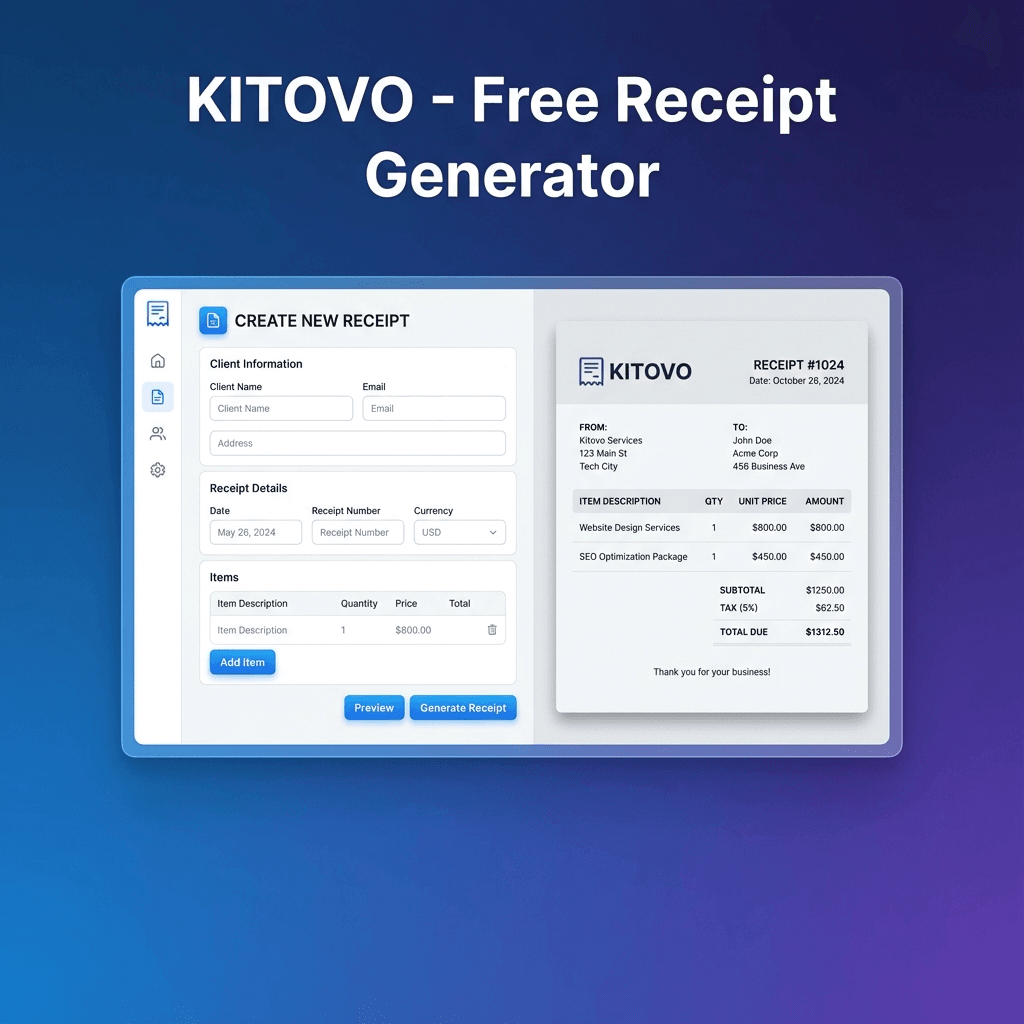
Kitovo
Part of the Kitovo team, dedicated to helping you create professional receipts and manage your documentation needs.
Share this article
Related Articles
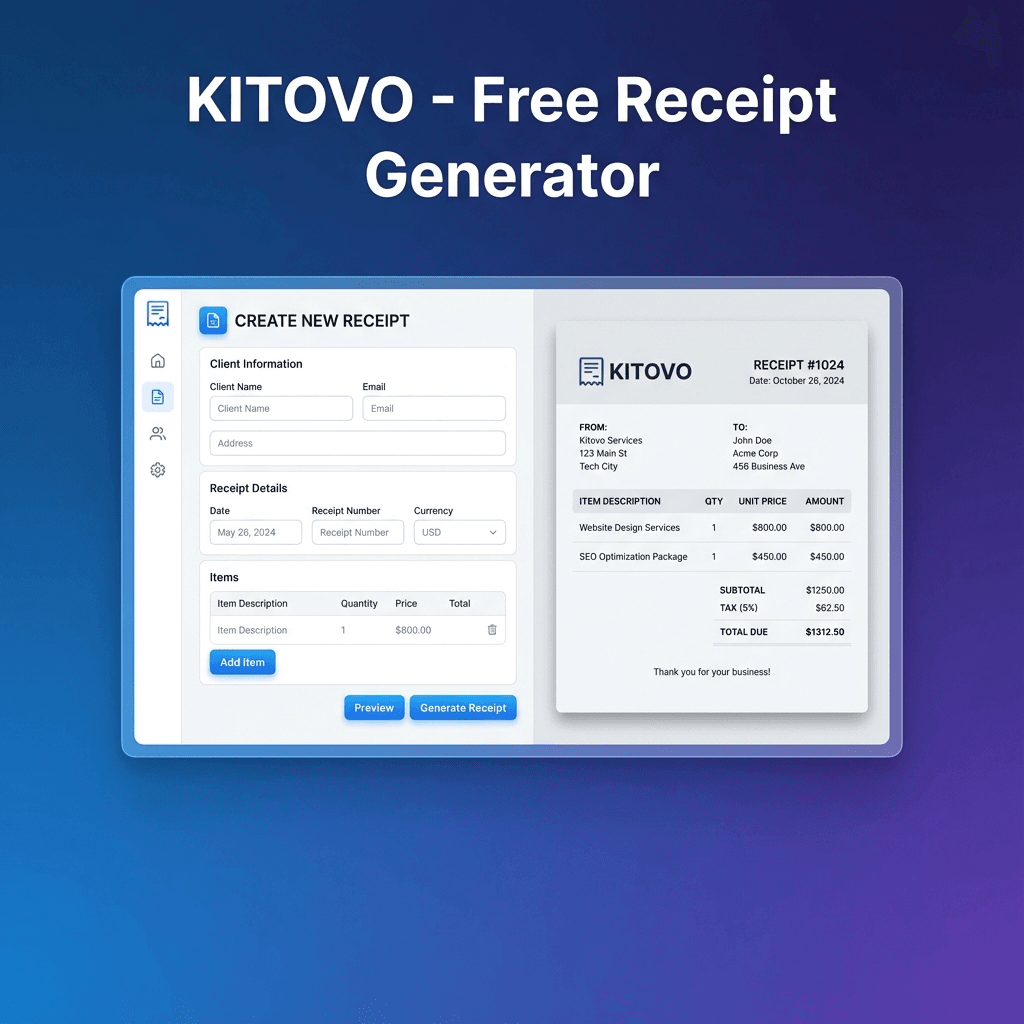
Receipt Examples & Samples for Every Situation
Browse real-world receipt examples and downloadable templates for various business scenarios.
Read article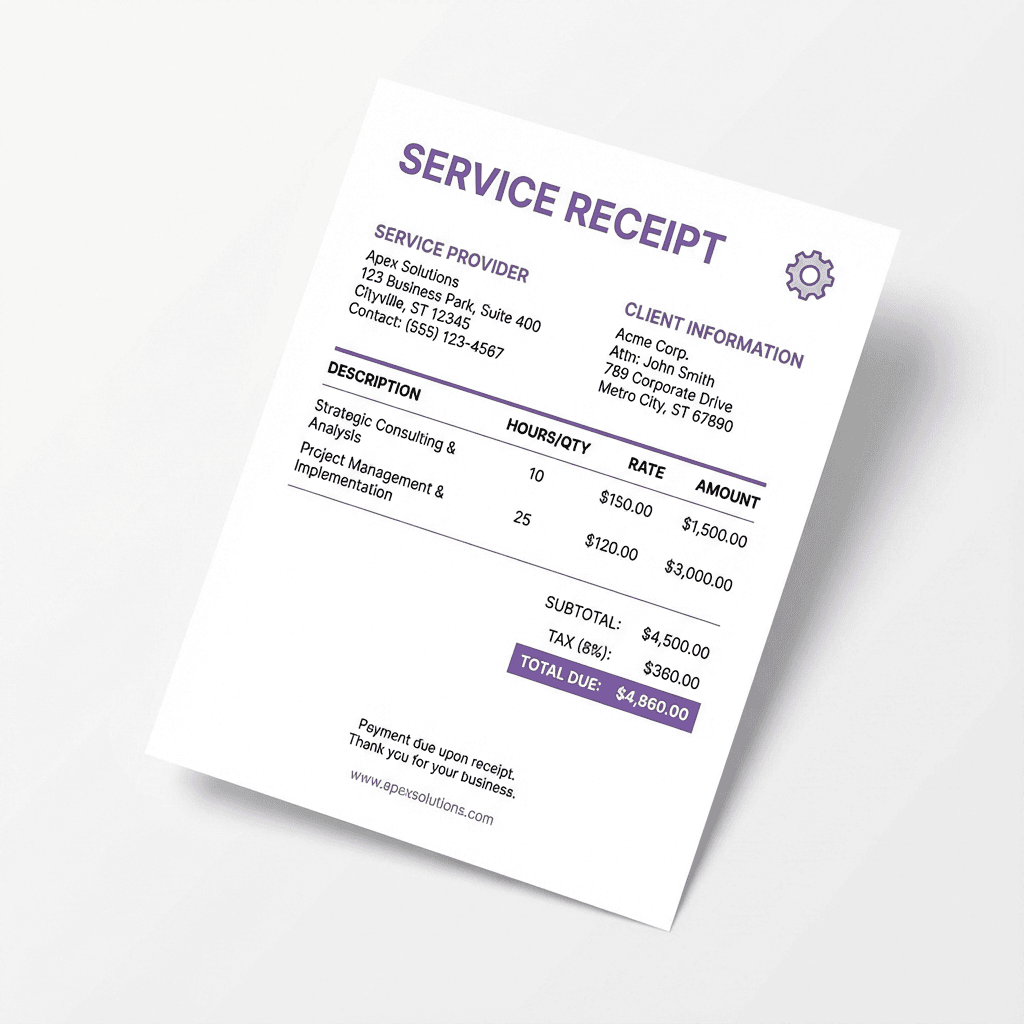
How to Write a Receipt for Services Rendered
Complete guide for freelancers and contractors on creating professional service receipts.
Read article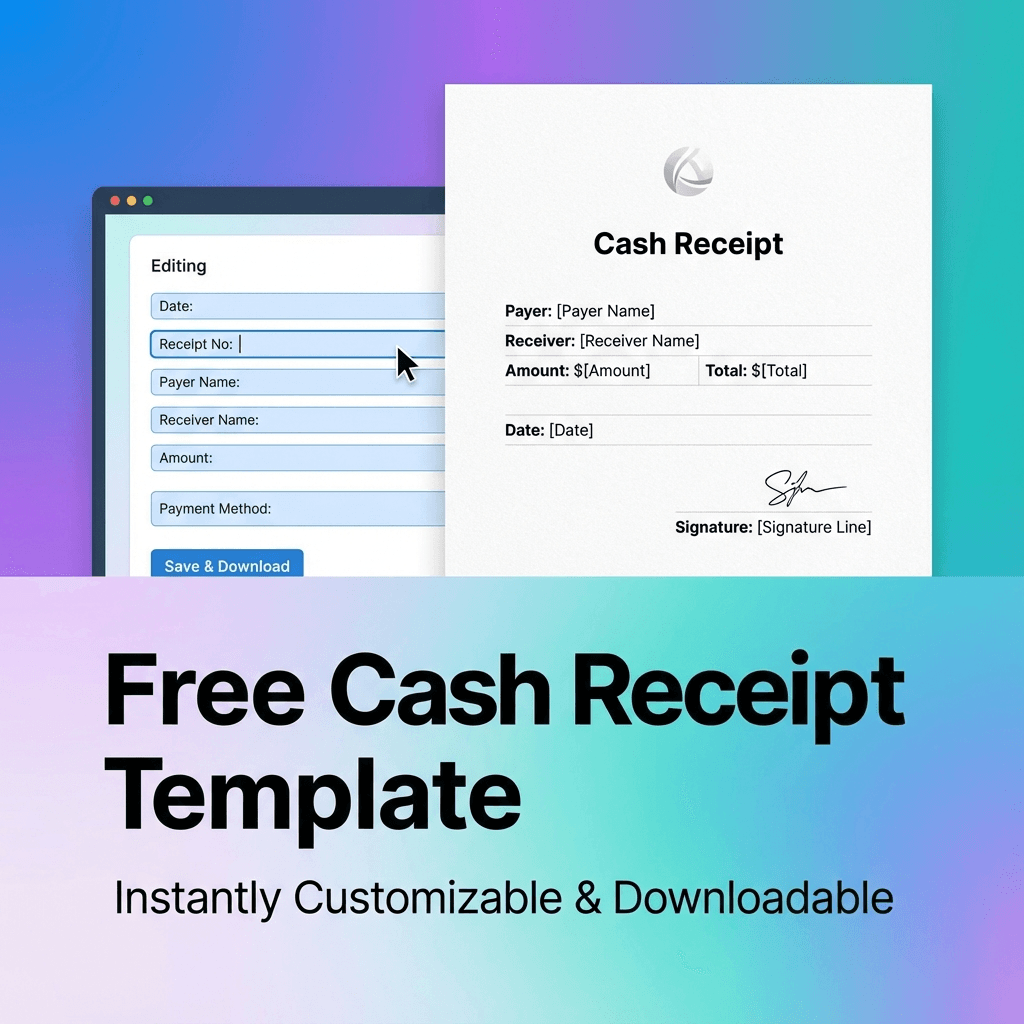
How to Get a Receipt for Cash Payment
Guide to obtaining and creating receipts for cash transactions. Protect yourself with proper documentation.
Read articleReady to Create Your Receipt?
Use our free receipt generator to create professional receipts in seconds. No signup required.