Receipt vs Invoice: What's the Difference?
Understand the key difference between receipt vs invoice documents. Learn when to use each for proper business financial management and tax compliance.
💡Key Takeaways
- Invoices are sent BEFORE payment to request payment; receipts are issued AFTER payment to confirm it was received
- An invoice says 'please pay this amount' while a receipt says 'thank you, payment received'
- For most business transactions, you need both: send invoice first, then issue receipt once paid
- Invoices can include payment terms, due dates, and late fees; receipts simply document completed payment
- Both documents have tax relevance: invoices track sales/receivables, receipts prove expenses were paid
Understanding the difference between a receipt and an invoice is crucial. The difference between receipt and invoice documents affects your business finances. While both are essential business documents, they serve fundamentally different purposes. They are issued at different stages of a transaction.
Confusing receipts and invoices can lead to bookkeeping errors. It can cause tax complications and payment disputes. The invoice vs receipt timing is the key distinction for proper financial management.
For generating the right document at each stage: use our receipt generator to confirm payments already received, or our sales receipt template for retail transactions. Service providers should use the service receipt template after completing hourly or project work. If terms and conditions are important to your transactions, the itemized receipt template provides detailed breakdowns.
Whether you're a business owner or a freelancer, this guide clarifies the receipt vs invoice distinction. You'll learn when to use each document. You'll understand how they work together to create complete transaction records.
Need to create a receipt right now? Our hotel receipt generator and restaurant receipt generator are tailored for travel and dining expenses, while gas receipt generator handles fuel expenses — each format is designed for specific industry needs.
✓ Free forever — no signup required
✓ Clear, compliant document formatting
✓ Private by design — receipts are built in your browser
🎯 Create the Right Document Every Time
Generate professional receipts or invoices in 30 seconds—no confusion, no mistakes
The Fundamental Difference: Timing
The core distinction between receipts and invoices comes down to timing. Understanding when each document is issued helps clarify their different purposes.
An invoice is issued BEFORE payment to request payment. A receipt is issued AFTER payment to confirm payment was received.
| Document | When Issued | Purpose |
|---|---|---|
| Invoice | BEFORE payment | Request payment |
| Receipt | AFTER payment | Confirm payment |
Think of it this way: an invoice says "You owe me this amount" while a receipt says "Thank you for paying." This timing difference is key to understanding when to use each document.
What is an Invoice?
An invoice is a formal document sent by a seller to a buyer requesting payment. It outlines what is owed and when payment is due.
Invoices are critical for business-to-business transactions and service-based businesses where payment happens after delivery.
Key Characteristics of Invoices
Invoices have several defining features. They are sent before payment is received.
Invoices include payment terms and due dates. They may include late payment penalties and are often used for B2B transactions.
Standard Invoice Information
A complete invoice should include the seller's business name and address. It also needs the buyer's name and billing address.
Every invoice needs a unique number and clear dates. The itemized list of products or services is essential with subtotal, taxes, and total.
What is a Receipt?
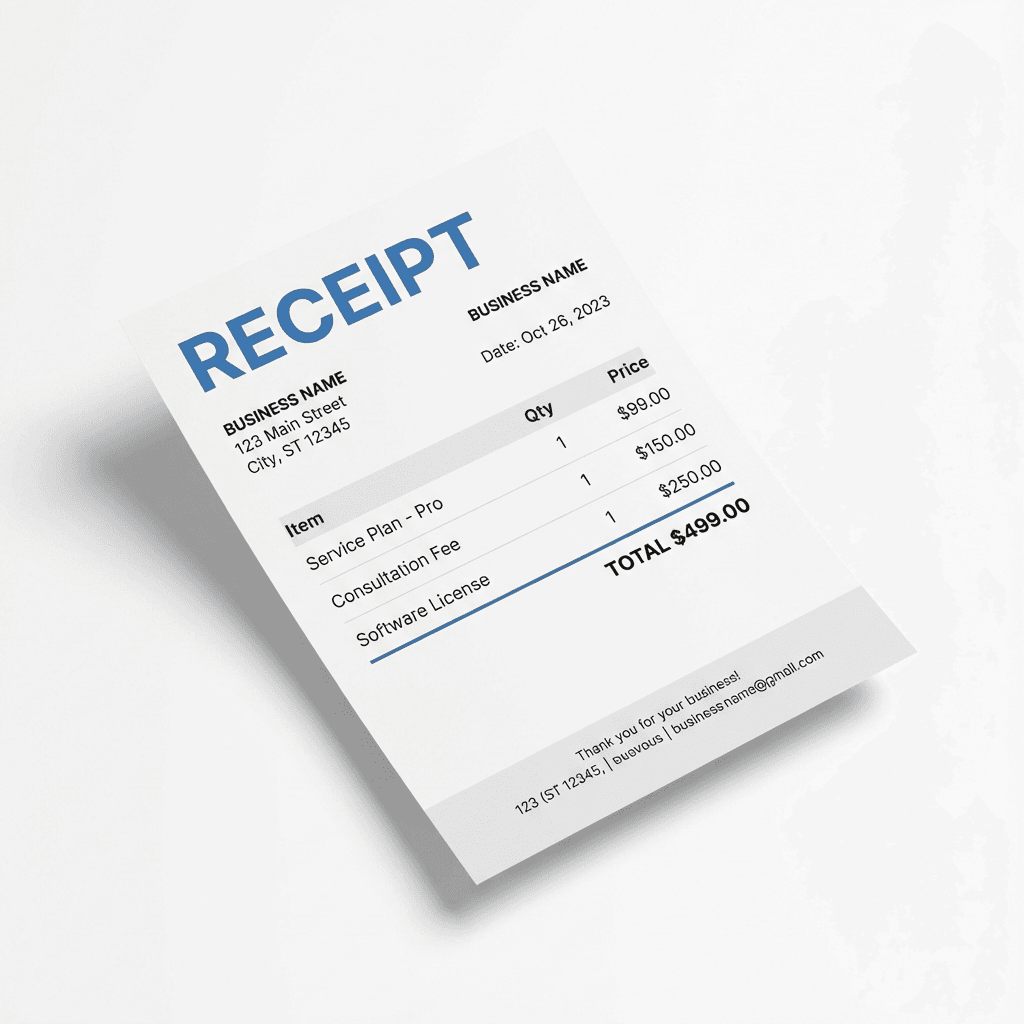
A receipt is a document that confirms payment has been received. It serves as proof that a transaction was completed.
Key Characteristics of Receipts
Receipts have distinct features. They are issued after payment is made.
Receipts prove payment was received and need no payment terms. They are used for all transaction types and are essential for expense claims.
Standard Receipt Information
A proper receipt contains key information. It needs the seller's business name, a unique receipt number, and the transaction date.
List the items purchased with quantities and prices. Show the total amount paid, the payment method, and include a "PAID" indication.
Need to create a receipt? Use our free receipt generator for professional results in seconds.
You can also create specialized receipts like cash receipts or sales receipts for specific transaction types.
Side-by-Side Comparison
Here's a detailed comparison of invoices and receipts. This table highlights the key differences between these documents.
| Feature | Invoice | Receipt |
|---|---|---|
| Timing | Before payment | After payment |
| Purpose | Request payment | Confirm payment |
| Payment Terms | Yes (Net 30, etc.) | No (already paid) |
| Due Date | Yes | No |
| Payment Method | Lists accepted methods | Shows method used |
| Legal Function | Creates obligation to pay | Proves payment was made |
| Accounting | Accounts receivable/payable | Completed transaction record |
| Who Keeps It | Both parties | Primarily the buyer |
When to Use an Invoice
Knowing when to use invoices is essential. Issue an invoice when payment isn't immediate.
Business-to-business sales typically work on an invoice basis. Send invoices after completing projects, for subscriptions, and when offering credit terms.
Invoice Example Scenarios
Here are practical examples. A freelance designer sends an invoice after completing work.
A supplier invoices retailers for goods delivered. Consultants bill monthly for services, and contractors invoice for project phases.
When to Use a Receipt
Understanding when to use receipts ensures proper documentation. Issue a receipt whenever payment is received.
This applies to point-of-sale transactions and cash payments. After customers pay invoices, send receipts to confirm payment.
Receipt Example Scenarios
Here are practical examples. A retail store gives a receipt for purchases.
A landlord provides a rent receipt when tenants pay. Freelancers send receipts after clients pay invoices.
The Invoice-to-Receipt Flow
For many business transactions, both documents are used in sequence. This creates a complete paper trail.
- Work is completed — You finish the job
- Invoice is sent — You send a payment request
- Customer pays — Payment is made
- Receipt is issued — You confirm payment
This creates a complete paper trail: the invoice documents what was owed. The receipt proves it was paid.
💡 Never Confuse Them Again
Our receipt generator automatically includes "PAID" stamps and payment confirmation—making it crystal clear this is a receipt, not an invoice
Create Clear Receipt →When You Don't Need Both
Some transactions don't require both documents. Understanding these exceptions helps streamline your documentation process.
Receipt Only (No Invoice Needed)
Some transactions only require a receipt. Retail point-of-sale purchases and immediate cash transactions are complete at the time of sale.
One-time purchases paid at the time of sale only need receipts. In these cases, payment happens immediately, so no invoice is necessary.
Invoice Only (Receipt Generated Automatically)
Some payment methods create automatic receipts. Online payments often provide automatic confirmation, and credit card transactions generate statements.
While these automatic records exist, providing a formal receipt is still good customer service. It adds professionalism to your business.
Tax and Legal Implications
Understanding the tax and legal implications of receipts and invoices is essential for compliance. Both documents play important roles in financial record-keeping.
Disclaimer: This information is for educational purposes only and does not constitute legal or tax advice. Tax laws vary by jurisdiction and change frequently, so consult with a qualified tax professional or accountant for advice specific to your situation.
For Sellers/Businesses
Businesses need both invoices and receipts for proper financial management. Invoices document your revenue and track accounts receivable.
Receipts prove you delivered what was sold and document payment methods. Both documents are essential during tax audits.
For Buyers/Customers
As a buyer, invoices help you track accounts payable and verify charges before paying. Receipts prove expenses for tax deductions.
Receipts support expense reimbursement claims and are required for warranty claims and returns.
Audit Protection
In case of a tax audit, both documents protect you. Invoices show what you billed and when, while receipts prove what was actually paid.
Having both documents creates a complete transaction record. Missing either document can raise red flags during an audit.
Common Mistakes to Avoid
Avoiding common errors ensures proper documentation. These mistakes can cause problems with taxes and disputes.
Mistake 1: Using an Invoice as a Receipt
An unpaid invoice doesn't prove payment. Customers need a receipt for proof.
Mistake 2: Not Issuing Receipts for Invoice Payments
When a customer pays an invoice, send a receipt. This confirms completion.
Mistake 3: Forgetting Cash Transaction Receipts
Cash leaves no automatic record. Always provide a cash receipt.
Mistake 4: Missing Receipt Numbers
Both documents need unique numbers. Without numbers, tracking becomes difficult.
Invoice-Receipt Hybrid Documents
Some situations call for combined documents. These serve multiple purposes and simplify record-keeping.
Paid Invoice (Invoice Receipt)
An invoice marked "PAID" can serve dual purposes. This simplifies record-keeping.
Pro Forma Invoice
A preliminary invoice provided before work begins. Once paid, issue a receipt.
Tax Invoice
In some countries, a "tax invoice" serves as both bill and receipt. These must meet specific legal requirements.
Frequently Asked Questions
What is the main difference between a receipt and an invoice?
The main difference is timing. An invoice is sent BEFORE payment to request payment. A receipt is issued AFTER payment to confirm that payment was received. An invoice says "please pay this amount" while a receipt says "thank you, payment received."
Can a receipt be used as an invoice?
No, they serve different purposes. An invoice requests payment and may include payment terms. A receipt confirms payment already made. However, some businesses issue an "invoice receipt" which combines both. It first serves as an invoice, then gets marked as "PAID" to become a receipt.
Do I need both an invoice and a receipt?
For most business transactions, yes. Send an invoice first to request payment. Then issue a receipt once payment is received. For immediate point-of-sale transactions like retail, a receipt alone is typically sufficient.
Which document do I need for tax purposes?
Both have tax relevance. Invoices help track accounts receivable and sales. Receipts prove expenses were actually paid. For expense deductions, receipts are typically required. For revenue reporting, invoices document what was billed.
When should I use an invoice instead of a receipt?
Use an invoice when you need to request payment before it's received. This includes B2B transactions, service contracts, or when offering payment terms. Use a receipt after payment is complete to confirm the transaction and provide proof of payment.
Conclusion
Understanding the difference between receipts and invoices is fundamental to proper business documentation. Invoices request payment before it's received, while receipts confirm payment after it's made.
For most business transactions, you'll need both documents. The invoice initiates the payment process, and the receipt completes it, creating a complete transaction record.
Ready to Create Professional Business Documents?
Generate a clear, correctly labeled receipt in seconds — no signup, no confusion
Understanding when to use receipts versus invoices is fundamental to proper business documentation. For more insights, explore our guides on what is a receipt and how to make a receipt.
Kitovo
Part of the Kitovo team, dedicated to helping you create professional receipts and manage your documentation needs.
Share this article
Related Articles
Receipt Examples & Samples for Every Situation
Browse real-world receipt examples and downloadable templates for various business scenarios.
Read article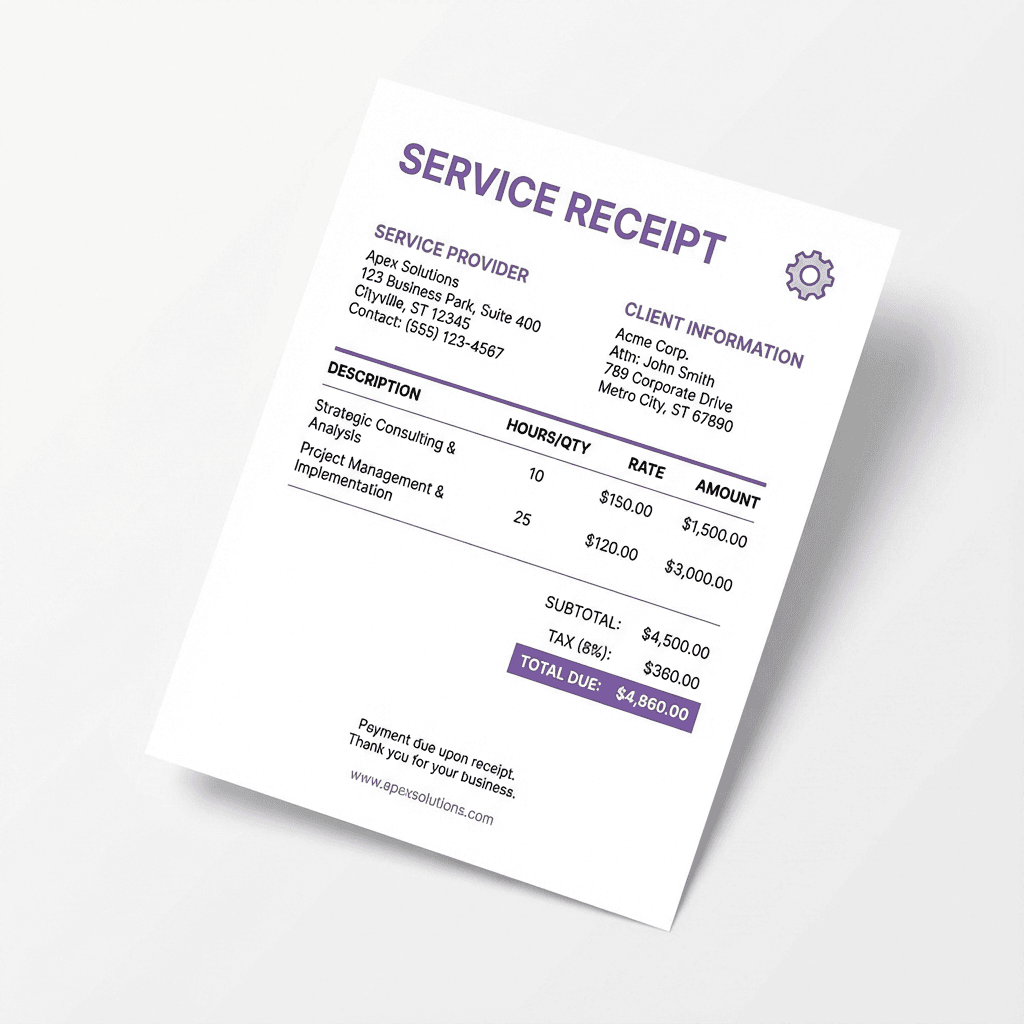
How to Write a Receipt for Services Rendered
Complete guide for freelancers and contractors on creating professional service receipts.
Read article
How to Get a Receipt for Cash Payment
Guide to obtaining and creating receipts for cash transactions. Protect yourself with proper documentation.
Read articleReady to Create Your Receipt?
Use our free receipt generator to create professional receipts in seconds. No signup required.